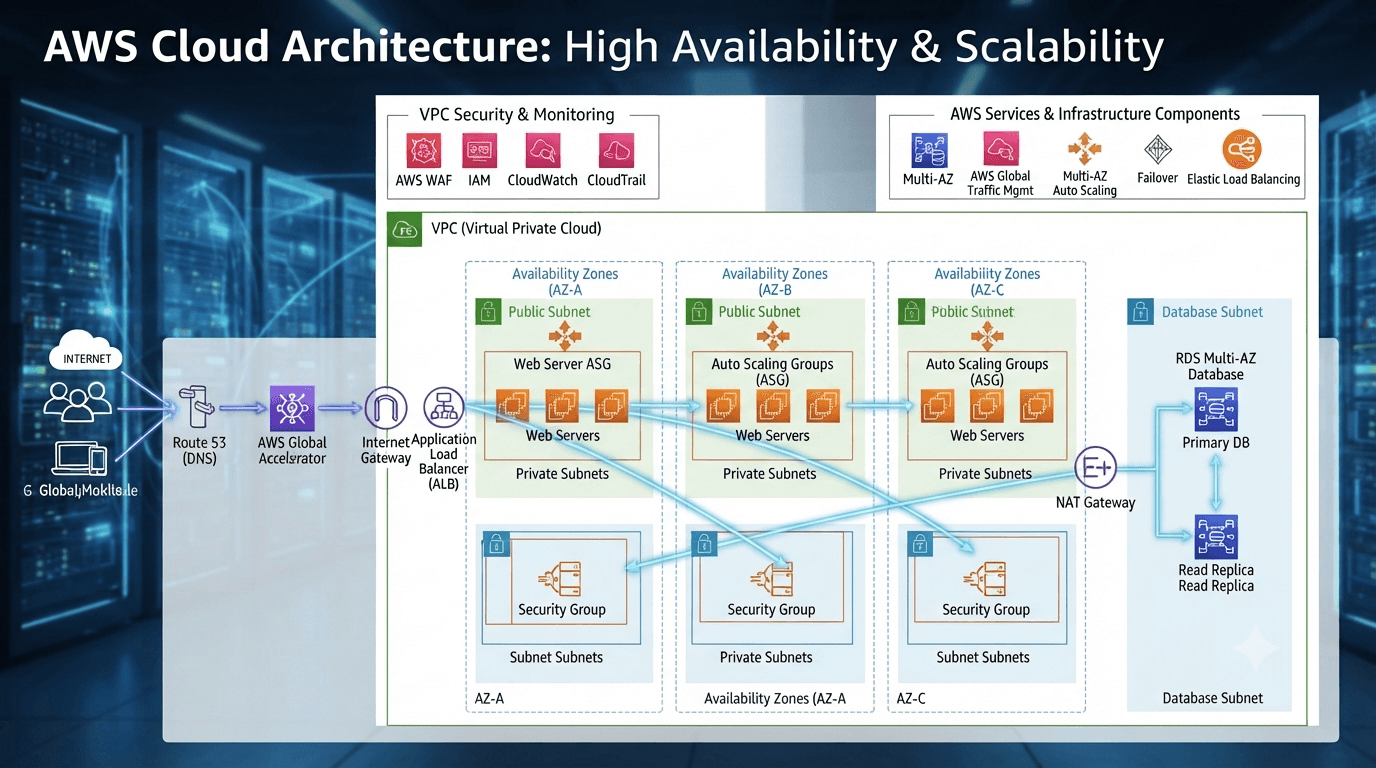
Load Balancing Explained: The Backbone of Scalable and Reliable Systems
Sep 2, 202613 min read
When building a small application, running everything on a single server may seem sufficient. As traffic grows, users expect faster responses, higher availability, and uninterrupted service.
This is where load balancing becomes essential. It is one of the foundational building blocks of scalable and resilient software systems.
What Is Load Balancing?
A load balancer distributes incoming network traffic across multiple servers.
Instead of sending every request to a single machine, it routes requests to available servers so that no one host becomes overloaded.
Without a load balancer:
Users

|

v

Server 1
With a load balancer:
Users

|

v

Load Balancer

|

+--------+--------+

| | |

v v v

S1 S2 S3
Each server handles a portion of the traffic. The result is better performance and higher reliability.
Why Load Balancing Became Necessary
In the early days of the web, a single server was often enough. As businesses grew, applications faced new constraints:
Increasing user traffic
Larger databases
Higher availability requirements
Global user access
Performance bottlenecks
Hardware failures
Imagine an e-commerce site during a major sale.
Without load balancing:
10,000 Users

|

v

Server 1
The server becomes overloaded and eventually crashes.
With load balancing:
10,000 Users | v Load Balancer / |
/ |
S1 S2 S3
Traffic is shared across multiple servers, which prevents overload.
What Problems Does Load Balancing Solve?
1. Server Overload
A single server has limited CPU, memory, and network capacity. Load balancing spreads requests across multiple machines.
Result: Better performance and faster response times.
2. Single Point of Failure
Without redundancy, one downed server takes the entire product offline.
Users

|

Server 1 (Down)
With a load balancer, failed servers are skipped and traffic continues on healthy ones.
Load Balancer

|

+--+--+

| |

S1 S2

|

Still Online
Result: Higher availability.
#Load Balancer
#System Design
#Software Architecture
#Scalability
#Backend Engineering
3. Scalability Challenges
As traffic grows, you add more servers instead of replacing the existing one.
Traffic is distributed evenly, which keeps the site available under peak load. This is how modern platforms absorb massive traffic.
Final Thoughts
Load balancing is not just a performance optimization. It is a fundamental architectural pattern for building scalable, reliable, and highly available systems.
As an application grows, a single server becomes a bottleneck. A load balancer lets you distribute traffic, prevent downtime, improve performance, and scale horizontally with confidence.
Whether you are running a startup SaaS platform, an e-commerce application, or a microservices architecture, load balancing is one of the most valuable investments you can make in your infrastructure.
Load Balancing Explained: The Backbone of Scalable and Reliable Systems | Monir Hossain | Full Stack Developer